Can I Refuse to Complete on a New Build Because of Snags?
Published: July 2026
Buying a new-build home is exciting, but discovering defects before completion can leave many buyers asking the same question:
Can I refuse to complete on a new-build property because of snags?
The short answer
It depends.
In most cases, minor cosmetic snags are not enough to justify refusing legal completion. However, if significant defects affect the property's safety, security, weatherproofing or habitability, you should seek advice from your solicitor and, where appropriate, an independent property professional before making any decision.
Every situation is different, and the consequences of delaying completion can be significant.
What is a snag?
A snag is a defect or issue identified in a newly built home.
Some are purely cosmetic, while others may be more serious.
Common examples include:
Poor paint finishes
Scratched windows
Damaged doors
Missing sealant
Loose sockets
Poor brickwork
Leaking pipework
Uneven flooring
Cracked tiles
If you're new to snagging, read our Is It Really a Defect? How to Tell the Difference Between a Cosmetic Issue and a Genuine New Build Defect guide.

Can cosmetic snags justify refusing completion?
Generally, no.
Most new-build homes have a number of cosmetic defects when first handed over. Developers normally rectify these as part of their aftercare process.
Examples include:
Minor paint imperfections
Small plaster blemishes
Slightly uneven sealant
Scuffed skirting boards
Cupboard door adjustments
Although frustrating, these issues are usually resolved after you've completed and moved into the property.
When should you think more carefully before completing?
Some defects may require further investigation before you decide whether to complete.
Examples could include:
Water leaks or evidence of water ingress
Significant structural cracking or movement
Missing or defective fire protection
Serious electrical defects
Heating or hot water systems that do not function correctly
Doors or windows that cannot be secured
Roof defects causing water penetration
Drainage problems
Defects that could make the home unsafe or not reasonably habitable
Not every defect on this list will justify delaying completion, but they should be taken seriously.
If concerns have already been identified by your solicitor, a professional snagging inspector or another suitably qualified professional, you should discuss these with them before making any decision.
Things to consider before deciding
Every purchase is different.
Before deciding whether to proceed with completion, consider the wider picture.
How responsive has the developer been?
Have they:
Responded quickly?
Been open and transparent?
Already rectified issues without argument?
A developer with a strong aftercare process may give you greater confidence that outstanding snags will be resolved promptly.
What do their aftercare reviews say?
Spend time researching independent reviews.
Look for comments about:
Customer service
Communication
Timescales for repairs
Whether snagging issues were resolved satisfactorily
Patterns are often more useful than individual reviews.
What standard have they achieved elsewhere on the development?
If you're shown another completed plot finished to an excellent standard, that's generally a positive sign.
It demonstrates the quality the developer is capable of delivering.
Equally, if several completed homes appear unfinished or poorly maintained, it may justify asking more questions.
Is the rest of the development complete?
If the site is nearing completion and appears well managed, aftercare resources may already be in place.
On larger developments still under construction, repairs sometimes take longer simply because contractors remain focused on building new plots.

What are the consequences of delaying completion?
Before making any decision, understand:
Any financial implications
Mortgage offer expiry dates
Removal arrangements
Temporary accommodation costs
Advice provided by your solicitor
Your solicitor is best placed to explain the legal implications of delaying completion.
What if a serious issue has already been identified?
If a significant defect has been highlighted by:
your solicitor,
a pre-purchase survey,
a professional snagging inspector,
or another suitably qualified professional,
don't ignore it.
Discuss the issue fully before deciding whether to proceed.
In some situations, further investigation or independent advice may be appropriate.
What should you do before completion?
Whether you decide to complete or not, it's sensible to keep detailed records.
We recommend:
Photograph every defect.
Record the exact location.
Write a clear description.
Keep copies of all emails.
Save any promises made by the developer.
Keep a dated record of repairs.
Understand what is covered by your new home warranty.
A well-organised snagging list is far more effective than relying on memory.
How SnagClear can help
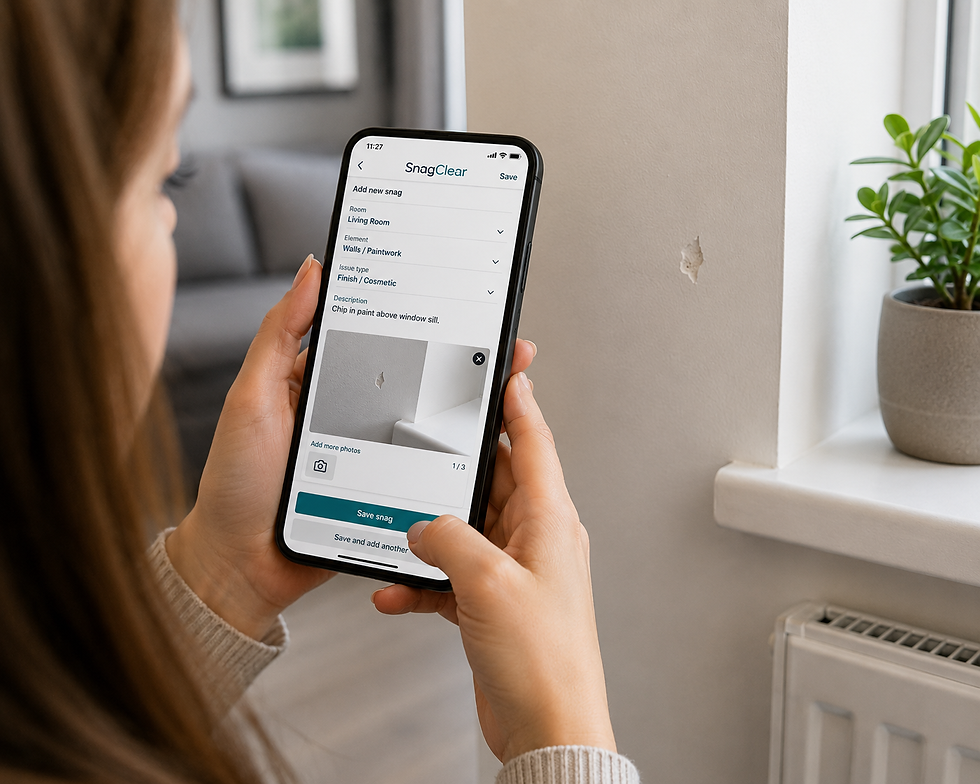
SnagClear helps UK new-build homeowners create professional snagging reports that are easy for developers to understand.
With SnagClear you can:
Record every snag with photographs.
Organise defects by room.
Generate professional PDF reports.
Track repairs after completion.
Keep a permanent photographic record.
Download the SnagClear App
Need independent guidance?
Sometimes the difficult question isn't "Is this a snag?"
It's:
"Is this serious enough that I should think carefully before completing?"
If you're unsure how significant a defect may be, the SnagClear Advisory Service can provide independent guidance to help you understand the issues before you make your decision.
Frequently Asked Questions
Can I refuse to complete because of cosmetic snags?
Usually not. Cosmetic defects are commonly resolved through the developer's aftercare process after completion.
Can a developer make me complete?
Your legal position depends on your contract and circumstances. If you're considering delaying completion, always seek advice from your solicitor.
Should I get a professional snagging inspection before completion?
Many buyers choose to arrange an independent snagging inspection either before or shortly after legal completion, depending on the developer's access policy.
Should I create my own snagging list?
Yes. Even if you later instruct a professional inspector, keeping your own detailed photographic record helps ensure nothing is overlooked.
Final thoughts
Most new-build homes contain some snags, and most are successfully resolved after completion.
The important thing is understanding the difference between routine cosmetic defects and issues that deserve closer attention.
By recording defects properly, asking the right questions and seeking appropriate advice where necessary, you'll be in a much stronger position to make an informed decision.


Comments