Is It Really a Defect? How to Tell the Difference Between a Cosmetic Issue and a Genuine New Build Defect
Buying a new-build home is exciting, but it can also be frustrating when you start noticing issues after moving in.
A common question homeowners ask is:
"Is this actually a defect, or am I being unreasonable?"
The answer is not always straightforward.
Some issues are genuine defects that a developer should investigate and rectify. Others may be cosmetic imperfections, normal settlement, maintenance items or features that fall within accepted construction standards.
Understanding the difference can save a great deal of time, frustration and unnecessary disputes.

What's the Difference Between a Snag and a Defect?
The terms "snag" and "defect" are often used interchangeably, but they do not always mean the same thing.
A snag is typically a relatively minor or cosmetic issue that requires correction or finishing.
Examples include:
Poor silicone application.
Paint splashes.
Damaged skirting boards.
Scratched glass.
Doors requiring adjustment.
Missing sealant.
A defect is generally more significant and often relates to workmanship, performance or functionality.
Examples may include:
Water ingress.
Inadequate ventilation.
Missing insulation.
Persistent leaks.
Incorrect installation of building elements.
In reality, there is often overlap between the two terms.
A snag may be the result of defective workmanship.
A defect may initially present itself as what appears to be a simple snag.
For homeowners, the important question is often not whether something is technically a snag or a defect, but whether the issue requires attention and whether it is performing as intended.
Whatever terminology is used, keeping clear records can be extremely helpful. Photographs, dates, locations and notes can make it much easier to understand how an issue develops over time and support any discussions with your developer or warranty provider.
Not Every Imperfection Is Automatically a Defect
No home is perfect, including a brand-new one.
Construction standards recognise that some minor imperfections are inevitable due to the materials and methods used during the build process.
For example:
Small shrinkage cracks can occur as materials dry out.
Minor timber movement is normal.
Decorated surfaces may contain very slight variations.
Doors and windows may require routine adjustment during the first year.
This does not automatically mean the property has been built incorrectly.
However, that does not mean every concern should simply be dismissed as "normal".
What Makes Something a Genuine Defect?
In simple terms, a defect is generally an issue where:
Materials have failed.
Workmanship falls below expected standards.
The item does not perform its intended function.
Water penetration is occurring.
Safety may be compromised.
The issue is likely to worsen if ignored.
In many cases, the key question is not:
"Does it look perfect?"
but rather:
"Is it performing as it should?"
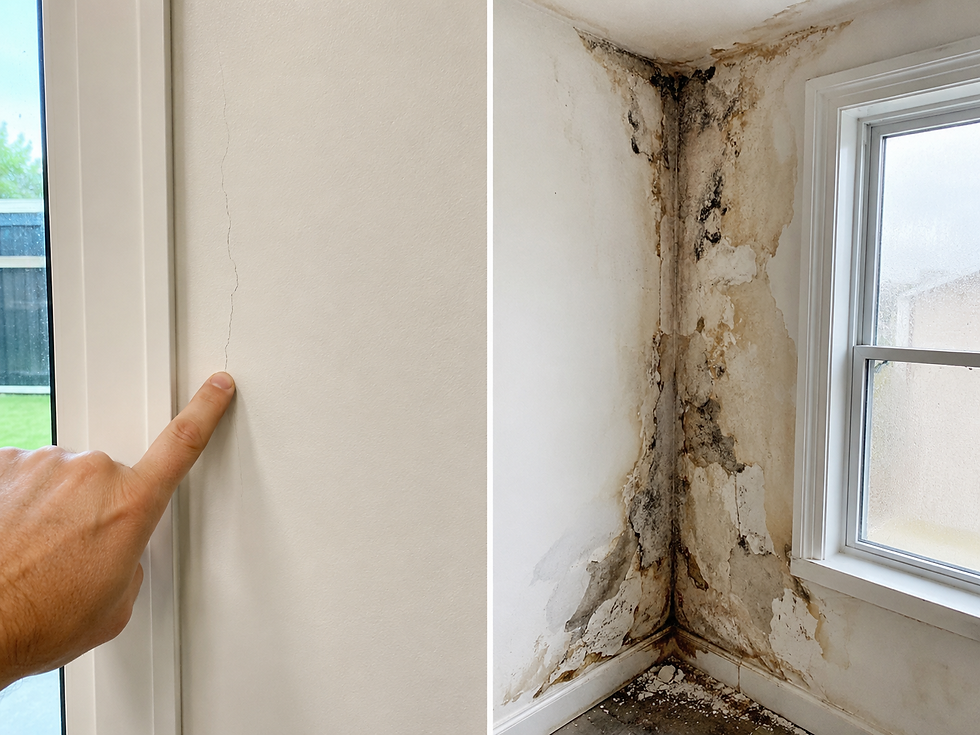
Common Examples Homeowners Often Misunderstand
Staircase Cracking
One of the most common concerns in new-build homes is cracking where the staircase meets the wall.
In many cases, this is caused by:
Normal movement and vibration.
Drying materials.
Minor settlement.
Shrinkage of filler and decoration materials.
These cracks are often cosmetic and can usually be repaired during routine decoration.
However, if cracking becomes excessive, continues to worsen significantly or is accompanied by movement elsewhere, further investigation may be appropriate.
Doors That Stick
A door that catches slightly may simply require adjustment.
Timber and building materials naturally respond to changes in temperature and humidity.
However, if multiple doors suddenly stop closing properly or movement appears to be increasing, it may indicate a wider issue requiring investigation.
Uneven Paint Finishes
Many homeowners identify paint imperfections as defects.
The assessment often depends on:
Viewing distance.
Natural lighting conditions.
Visibility during normal use.
Minor imperfections that can only be seen under very specific lighting conditions may not necessarily indicate poor workmanship.
Water Ingress, Damp and the Drying-Out Process
Water-related concerns are among the most common reasons homeowners seek independent advice.
However, damp does not automatically mean water is entering the property from outside.
New-build homes often contain a significant amount of construction moisture.
Plaster, screeds, timber and other materials can take many months to fully dry out after completion. During this period, homeowners may notice symptoms that appear concerning but are not necessarily caused by a defect.
For example:
Skirting boards fixed to plaster that has not fully dried may show elevated moisture readings.
Decoration applied too early can trap moisture within finishes.
Condensation can occur as construction moisture leaves the building.
Mould may develop where moisture becomes trapped and ventilation is limited.
This does not automatically mean there is a leak.
Equally, drying-out should not be used as a blanket explanation for every damp-related concern.
In some cases, what initially appears to be normal drying-out can reveal a genuine defect such as:
Inadequate ventilation.
Missing insulation.
Plumbing leaks.
Water ingress around windows or doors.
Defective guttering or rainwater goods.
The challenge is that the symptoms can appear very similar during the early stages.
Questions worth considering include:
Is the issue improving or worsening over time?
Does it worsen during rainfall?
Is it localised to one area?
Is there visible staining or active water penetration?
Is the property being adequately heated and ventilated?
A drying-out issue may simply require time and improved ventilation.
A genuine defect may require further investigation and remedial works.
If you are concerned, keep photographs, monitor changes and record when symptoms first appear. Tracking issues over time often provides valuable context when trying to distinguish between normal drying-out, condensation-related concerns and genuine defects.
Identifying the cause is often more important than identifying the symptom.

Missing or Inadequate Insulation
Insulation concerns are often not tolerance issues at all.
If insulation has been omitted, poorly installed or significantly compressed, the property may not perform as intended.
This can affect:
Comfort.
Energy efficiency.
Heating costs.
These concerns may warrant further investigation.
Tolerances Are Only One Part of the Picture
Many homeowners become fixated on tolerances.
While tolerances are important, they are only one tool used when assessing construction quality.
A common misconception is:
"If it's within tolerance, it's acceptable."
Equally common is:
"If it's outside tolerance, the developer must fix it."
Neither statement is always true.
Construction disputes often involve several considerations, including:
Functionality.
Workmanship quality.
Durability.
Relevant standards.
Warranty requirements.
The specific circumstances of the defect.
This is why seemingly similar issues can sometimes lead to different outcomes.
Questions to Ask Yourself
Before raising a concern, consider:
Is the issue affecting how something works?
A cosmetic mark may be very different from a door that will not lock properly.
Is water involved?
Water ingress should generally be investigated promptly.
Is the issue getting worse?
Progressive movement may indicate a different level of concern than a defect that remains stable.
Is it a safety concern?
Any issue affecting safety should be addressed immediately.
Is the concern purely aesthetic?
If so, the assessment may depend on visibility, severity and accepted construction standards.

What Should You Do If You're Unsure?
One of the biggest frustrations for homeowners is receiving conflicting information.
The developer may say the issue is acceptable.
A neighbour may insist it is defective.
Online forums often provide completely different opinions.
Unfortunately, construction defects are rarely black and white.
An issue may be:
Cosmetic.
Maintenance-related.
Within accepted standards.
Outside accepted standards.
A genuine defect requiring attention.
Determining which category applies often requires reviewing the available evidence and understanding the relevant standards.
This is one reason many homeowners choose to keep a structured record of concerns as they arise. Having photographs, dates, locations and a history of changes can make it much easier to assess whether an issue is cosmetic, worsening over time or potentially indicative of a genuine defect.
Need Independent Guidance?
If you're unsure whether an issue is cosmetic, maintenance-related or potentially defective, an independent technical review may help provide clarity.
At SnagClear, we can review photographs, descriptions and supporting information to help homeowners better understand construction issues, relevant standards and possible next steps before escalating matters further.
Keep Your Records Organised
Whether an issue turns out to be a snag, a defect or simply part of the drying-out process, good record keeping can make life significantly easier.
The SnagClear app allows homeowners to:
Record issues room-by-room.
Store photographs and notes.
Track concerns over time.
Generate organised reports for developers.
Many homeowners find that keeping a structured record from day one helps avoid the frustration of trying to remember what happened months later, particularly as the end of the developer defects period approaches.
Final Thoughts
Not every imperfection is a defect, but not every concern should be dismissed either.
Understanding the difference between cosmetic issues and genuine defects can help you focus your efforts where they matter most, avoid unnecessary disputes and ensure important concerns are properly investigated.
If in doubt, keep clear records, take photographs and seek professional guidance before assumptions are made on either side.


Comments