What If Your Developer Says "No Defect Found"?
Finding defects in your new-build home is frustrating enough. Receiving an email saying "No defect found", "Within tolerance", or "No further action required" can be even more so.
Many homeowners assume this is the end of the conversation.
In reality, it often isn't.
Sometimes the developer is correct. Sometimes the issue genuinely falls within accepted industry tolerances. But in other cases, the defect may not have been fully understood, adequately inspected, or clearly evidenced.
This guide explains what these responses actually mean, how to respond professionally, and when it may be appropriate to seek an independent opinion.

What Does "No Defect Found" Actually Mean?
It doesn't necessarily mean you're wrong.
It simply means that, based on the inspection carried out, the developer has concluded that no defect requiring remedial work has been identified.
There are several reasons this may happen:
The inspector couldn't reproduce the issue.
The defect wasn't visible during the inspection.
The description wasn't clear enough.
The photographs didn't show the problem effectively.
The issue is considered acceptable within recognised tolerances.
The inspector genuinely believes there isn't a defect.
Understanding why the issue has been rejected is the first step towards deciding what to do next.
Don't Assume the Matter Is Closed
Many homeowners feel they have no option but to accept the decision.
In most cases, you are entitled to ask for clarification.
A polite response such as:
"Could you please explain why this has been assessed as not being a defect?"
can often provide useful information.
The aim should always be to understand the reasoning rather than immediately challenge it.
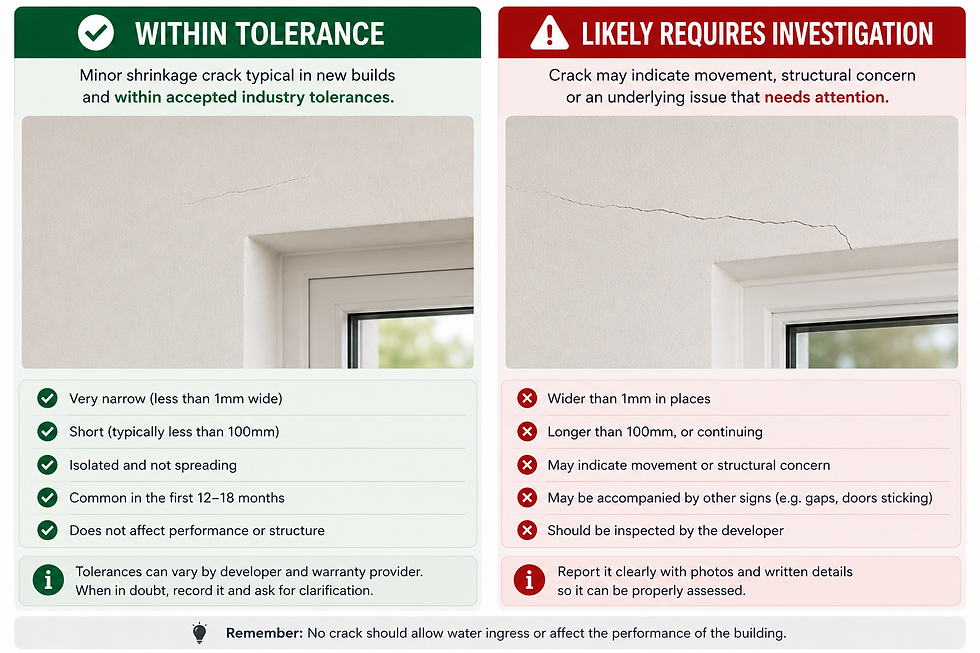
"Within Tolerance" Doesn't Mean "Perfect"
One of the most misunderstood phrases homeowners receive is:
"The item is within tolerance."
Every new-build home will contain small imperfections.
The construction industry recognises that some variations are unavoidable, provided they remain within accepted standards.
That doesn't mean every visible defect is automatically acceptable.
Whether something falls within tolerance depends on factors such as:
Its size
Its location
Whether it affects performance
Whether it would reasonably be visible during normal use
Relevant industry guidance
Review Your Evidence
Before responding, review the information you've provided.
Ask yourself:
Have I clearly identified where the issue is?
Are my photographs sharp and well lit?
Have I included both close-up and wider context photographs?
Is the defect easy to understand from my description?
Have I explained how it affects the property?
Sometimes improving the evidence is enough for a developer to reassess the issue.
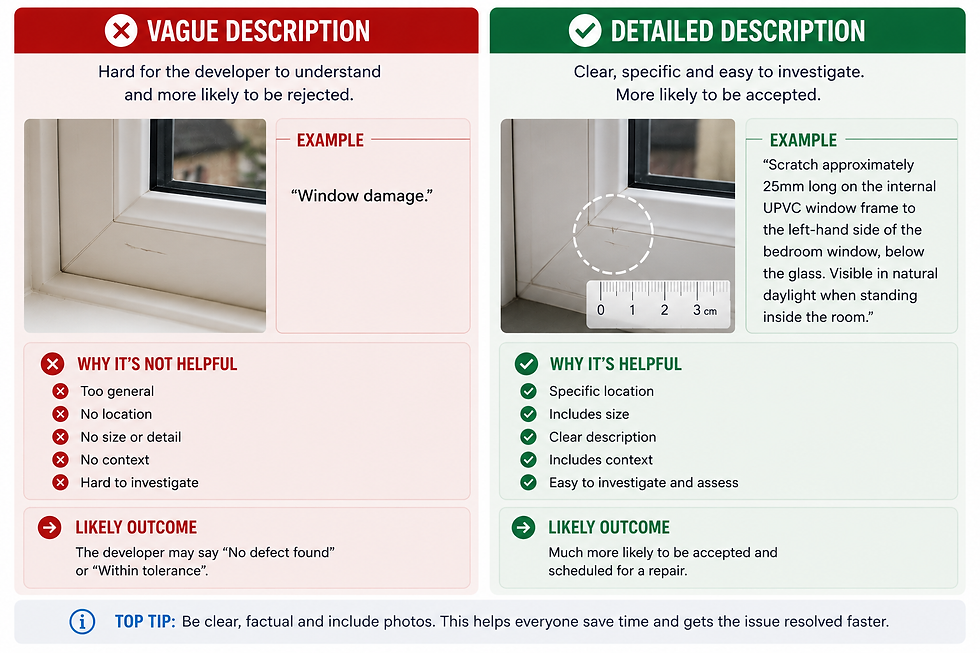
Good Evidence Makes Everyone's Job Easier
Instead of writing:
❌ Window damaged.
Consider:
✅ Scratch approximately 100mm long to the external frame of the bedroom window on the left-hand side.
The clearer the information, the easier it is for everyone involved to understand what is being discussed.
This is exactly why the SnagClear app encourages structured descriptions and photographs, helping homeowners create organised snagging reports that are easier for developers to review.
Has the Defect Changed Since the Inspection?
Some defects become more obvious over time.
For example:
Cracks continue to widen.
Doors begin sticking more frequently.
Water ingress becomes visible after heavy rain.
Sealant continues to fail.
External paving settles further.
If the condition has changed, take new photographs and explain what has happened since the previous inspection.
Fresh evidence can sometimes lead to a different outcome.
Keep Everything in Writing
Where possible:
Keep emails.
Save inspection reports.
Record dates.
Keep photographs.
Note when repairs were attempted.
A well-organised record makes future discussions much easier.
Check Your Warranty Deadlines
One mistake many homeowners make is assuming that because the developer is aware of an issue, nothing else needs to be done.
Depending on your warranty provider and the type of defect, there may be important notification requirements or time limits.
If a significant issue remains unresolved as your builder's defect liability period approaches, check your warranty documentation carefully and make sure you understand any reporting requirements.
Don't leave everything until the final few weeks.
When Should You Seek an Independent Opinion?
Sometimes a second opinion can provide reassurance.
Sometimes it identifies information that has been overlooked.
You may wish to seek independent advice if:
The defect has been rejected but continues to worsen.
You have received conflicting information.
You believe the inspection was incomplete.
You are approaching an important warranty deadline.
You simply want an impartial technical opinion before escalating the matter.
An independent review won't automatically mean the developer is wrong, but it can help you better understand the situation and make informed decisions.

Prevent Future Disagreements
Many disputes can be reduced by:
Recording defects as soon as you notice them.
Taking clear photographs.
Keeping written records.
Reporting issues promptly.
Organising everything into a professional snagging report.
The earlier issues are identified and documented, the easier they are generally to investigate.
If you're preparing your own snagging report, the SnagClear app helps organise defects room-by-room, attach photographs and generate a professional PDF report suitable for sharing with your developer.
Free Resources for New-Build Homeowners
If you're approaching completion—or your 2-year builder warranty deadline—our Free New Build Homeowner Pack includes practical resources to help you stay organised, including:
Printable snagging checklist
30 common new-build defects
Home maintenance planner
Defects timeline
(Coming soon) 2-Year Warranty Deadline Guide
It's free to download and designed specifically for UK new-build homeowners.
Frequently Asked Questions
Can I challenge a developer's decision?
Yes. If you believe a defect has been misunderstood or insufficiently investigated, you can ask for clarification and provide additional evidence where appropriate.
Does "within tolerance" mean it doesn't have to be repaired?
Not necessarily. It depends on the specific issue and the relevant guidance being applied.
Should I keep reporting defects after moving in?
Absolutely.
Many defects only become apparent after several months of normal occupation.
When should I seek an independent opinion?
If you remain unsure after discussing the matter with your developer, or you're approaching an important warranty deadline, an independent assessment may help you understand your options.
Final Thoughts
Receiving a response such as "No defect found" can feel disappointing, but it isn't always the end of the process.
Take time to understand the reasoning, review your evidence, and keep all communication professional and factual.
Many disagreements are resolved simply by providing clearer information or additional evidence.
If you're unsure what to do next, remember that you don't have to navigate the process alone. Whether you're using the SnagClear app to create a structured snagging report, downloading our Free Homeowner Pack, or seeking an Independent Defect Review, the goal is always the same: helping you make informed decisions about your new home.


Comments