Homebuyer Report vs Snagging Report vs Level 2 vs Level 3 Survey — What’s The Difference?
Buying a home comes with a huge amount of paperwork, inspections and advice — and many buyers are left confused by terms like Level 2 Survey, Level 3 Survey, Homebuyer Report and Snagging Inspection.
They all serve different purposes, and understanding the difference can help you decide what level of inspection is right for your property and stage of purchase.
In this guide, we’ll explain:
what each report is
who carries them out
what they cover
what they don’t cover
and whether you may need more than one.

What Is A Homebuyer Report?
A Homebuyer Report is a mid-level property survey typically carried out by a RICS surveyor.
It is designed to give buyers a general overview of the condition of a property and identify visible issues that may affect value or require attention.
Traditionally, this is what many people refer to as a “Level 2 Survey”.
A Homebuyer Report is usually most suitable for:
conventional properties
homes in reasonable condition
properties built with standard construction methods
homes without obvious major alterations or defects.
Typical areas covered may include:
visible cracking or movement
dampness
roof condition
timber defects
insulation and ventilation concerns
obvious repair or maintenance issues.
However, Homebuyer Reports are generally non-invasive. Surveyors do not move furniture, lift flooring or open up construction.
What Is A Level 2 Survey?
A Level 2 Survey is the updated RICS term for what many buyers still call a Homebuyer Report.
The two terms are often used interchangeably.
The survey is designed to:
assess the overall condition of the property
identify significant visible defects
highlight urgent issues
provide a traffic-light style condition rating system.
For many standard homes, this provides a reasonable balance between cost and detail.
However, buyers should understand that a Level 2 Survey is not designed to identify every cosmetic issue or finish defect.
These surveys are commonly instructed on older properties where:
cosmetic wear is expected
decoration may already be aged
small finish defects are considered normal
and the focus is more on condition and significant visible defects rather than presentation quality.
Because of this, many smaller cosmetic issues may not be included unless considered significant.
What Is A Level 3 Survey?
A Level 3 Survey is the most detailed standard property survey available through RICS surveyors.
This type of survey was previously known as a “Building Survey”.
Level 3 Surveys are usually recommended for:
older properties
non-standard construction
heavily altered homes
properties in poor condition
homes where major renovation is planned.
A Level 3 Survey typically provides:
much more technical detail
discussion of construction methods
advice on repair options
analysis of visible defects
potential causes of issues
future maintenance considerations.
These reports are often significantly longer and more detailed than a Level 2 Survey.
However, even Level 3 Surveys are not typically focused on cosmetic snagging or finish quality in the same way as a dedicated new-build snagging inspection.

What Is A Snagging Inspection?
A snagging inspection is different from a traditional property survey.
Rather than focusing mainly on overall property condition or structural assessment, snagging inspections are designed to identify defects, incomplete works and quality issues — particularly in new-build homes.
Common snagging items may include:
paint defects
uneven finishes
scratched frames or glass
poorly fitted doors
sealant issues
tiling defects
flooring damage
missing items
poor workmanship
minor functional defects.
Unlike Level 2 or Level 3 Surveys, snagging inspections are usually much more focused on finish quality, workmanship and presentation standards.
This is important because Level 2 and Level 3 Surveys are commonly instructed on older properties where cosmetic wear, decoration issues and general ageing are expected. As a result, many smaller finish defects or cosmetic concerns may not be noted unless they are considered significant.
By comparison, snagging inspections for new-build homes are often expected to assess the property to a much higher finish standard.

Who Carries Out Snagging Inspections?
Snagging inspections are carried out by a wide range of professionals and companies.
Some snagging inspectors are:
RICS surveyors
chartered building surveyors
clerks of works
site managers
experienced tradespeople
or construction professionals with new-build experience.
This has both advantages and disadvantages.
For example:
surveyors may bring broader technical reporting experience and professional accreditation
experienced construction professionals may have extensive practical knowledge of how new-build homes are actually built and finished day-to-day.
However, standards, reporting styles and experience levels can vary significantly between providers.
This is one reason buyers should always:
research inspectors carefully
read reviews
ask what the inspection includes
and understand exactly what type of report they are receiving.
Which Inspection Is Best For A New Build Home?
This depends on:
the age of the property
your concerns
your budget
and what you want the inspection to achieve.
For many buyers:
a Level 2 or Level 3 Survey is more focused on overall property condition and structural concerns
a snagging inspection is more focused on finish quality, defects and workmanship.
Because of this, some buyers choose to have both.
For example:
a buyer purchasing an older property may prioritise a Level 3 Survey
a buyer purchasing a brand-new home may prioritise a snagging inspection
some buyers may combine inspections depending on risk and budget.
There is no single “correct” answer for every purchase.
For many buyers, there is also a reassurance factor in having an experienced professional inspect the property independently. Even where defects are relatively minor, buyers often value the peace of mind that comes from knowing the property has been reviewed by somebody familiar with construction and common new-build issues.
What These Reports Usually Don’t Cover
One common misunderstanding is assuming any survey or snagging inspection guarantees every issue will be identified.
In reality:
inspections are limited to what is visible and accessible at the time
surveyors do not generally carry out destructive investigations
hidden defects may still exist
minor issues may not always be reported if considered outside the scope of the inspection type.
It’s also important to understand that many reports include limitations and assumptions which should always be read carefully.
Snagging Isn’t Just About Move-In Day
One thing many homeowners discover is that defects often continue appearing after completion.
Settlement movement, shrinkage, sealant failure and decoration issues can emerge gradually over time as the property dries out and materials settle.
This is one reason many homeowners continue recording issues during the warranty period rather than relying only on an initial snagging inspection.
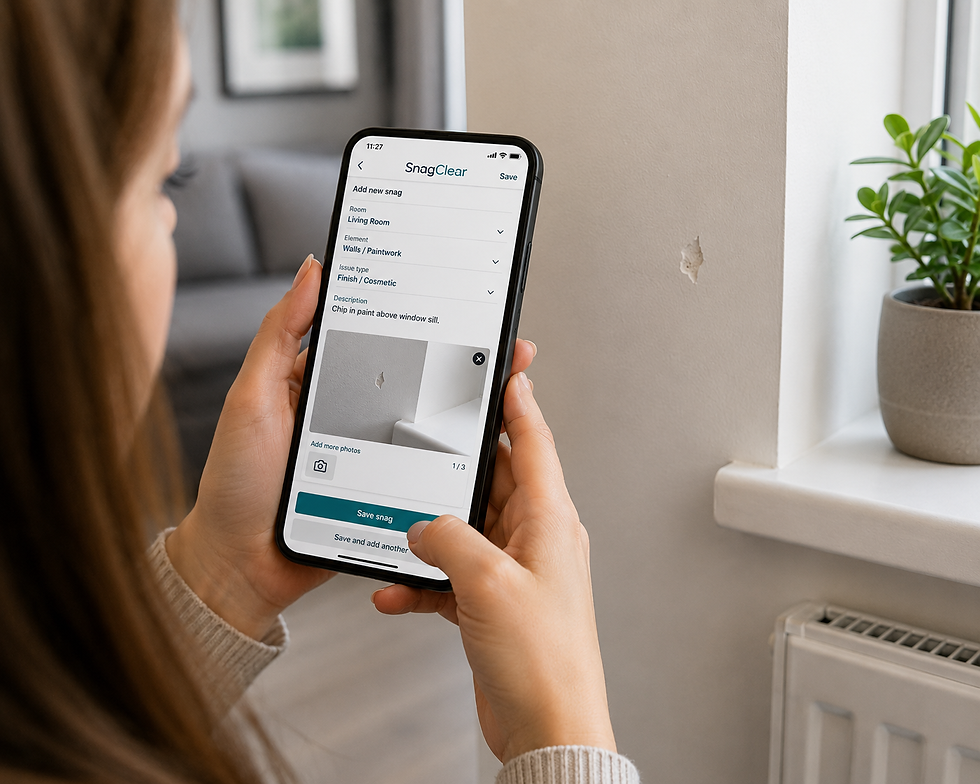
SNAGCLEAR helps homeowners:
record defects room-by-room
keep photo records organised
generate professional-style snag lists
track what has been fixed and what remains outstanding over time.
Download the app, record your first snag, and generate your preview report for free.
Do You Need A Professional Snagging Inspector?
Professional snagging inspections can add real value, particularly for buyers who:
are unfamiliar with construction
want an independent inspection
are purchasing high-value properties
or want more technical assessment.
However, many homeowners also carry out their own snagging process alongside professional inspections.
Even where a professional inspection is obtained, keeping organised records during the warranty period is still important.
INTERNAL LINK: HOW TO CHOOSE A SNAGGING INSPECTOR BLOG
Final Thoughts
Level 2 Surveys, Level 3 Surveys and snagging inspections all serve different purposes.
Understanding the difference can help buyers:
avoid unrealistic expectations
choose the right inspection for their property
and keep better records throughout the ownership period.
For many new-build homeowners, snagging is not just a one-day inspection — it becomes an ongoing process of recording, monitoring and following up defects during the warranty period.
Whether you choose a professional snagging inspection, carry out your own checks, or combine both approaches, keeping organised records during the warranty period is extremely important.
SNAGCLEAR was designed to help homeowners record defects room-by-room, generate professional-style snag lists and track issues over time in a clear, structured way.
For homeowners carrying out their own snagging process, SNAGCLEAR also includes practical guides and homeowner resources designed to help identify common new-build issues.


Comments